River basins of Austria.
Austria lies at the heart of Central Europe and is defined by its role as a major alpine water source. Austria is divided between three major European river basins: the Danube, the Rhine, and the Elbe. Together, these basins shape the country’s salmonid diversity, fishing traditions, and conservation priorities. Understanding these drainage systems is essential for anglers exploring Austria’s native trout waters and for those interested in lineage‑specific conservation.
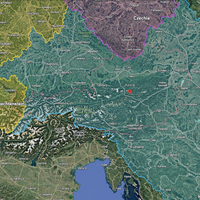
Danube River basin.
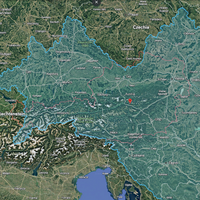
The Danube basin dominates Austria, draining more than 95% of the country’s territory. Rivers flow eastward toward the Black Sea and originate primarily in the Alps, creating a vast network of cold, fast‑flowing mountain streams, alpine rivers, and large lowland systems. This basin supports Austria’s richest diversity of native salmonids and is central to the country’s fly‑fishing culture.
Key Species:
- Brown Trout 'Danubian' (Salmo trutta) — native and widely distributed.
- European Grayling (Thymallus thymallus) — native and popular among fly anglers.
- Huchen (Hucho hucho) — native to larger rivers like the Sava, Drava and Kolpa.
- Alpine char (Salvelinus umbla) – alpine lakes
Major Rivers:
- Danube River: Austria’s main river, receiving all major tributaries and forming the backbone of the basin.
- Inn River: A large alpine tributary with strong grayling and brown trout populations; upper reaches are classic alpine fly‑fishing waters.
- Enns River: One of Austria’s most important salmonid rivers, known for grayling, brown trout, and huchen conservation.
- Mur & Mürz Rivers: Southern Austrian rivers supporting native trout and grayling, with huchen present in larger sections.
- Drava River: Alpine headwaters flowing east into Slovenia and Croatia; historically important for huchen, now heavily influenced by hydropower.
- Salzach River: Major northern Alpine river with strong grayling traditions and tributary trout fisheries.
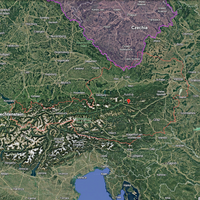
Elbe River basin.
A small portion of northern Austria drains into the Elbe River system, which flows northward to the North Sea. This basin is limited in size but ecologically significant, representing a transition zone between Alpine and Central European salmonid populations.
Key Species:
- Brown Trout 'Atlantic' (Salmo trutta) — native and widely distributed.
- European Grayling 'Mixed central Europe' (Thymallus thymallus) — native and popular among fly anglers.
Major Rivers:
- Lainsitz (Lužnice): The primary Austrian river draining northward from the Gmünd region into the Vltava and onward to the Elbe system.
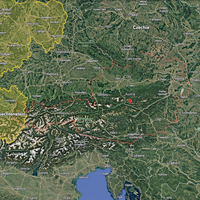
Rhine River basin.
The Rhine basin occupies western Austria, primarily the province of Vorarlberg. Rivers in this basin flow westward toward the North Sea. Although geographically limited within Austria, the Rhine basin is biologically distinct and hosts Atlantic‑lineage salmonids, separating it clearly from the Danube system.
Key Species:
- Brown Trout 'Atlantic' (Salmo trutta) — native and widely distributed.
- European Grayling 'Mixed central Europe' (Thymallus thymallus) — native and popular among fly anglers.
- Alpine char (Salvelinus umbla) – alpine lakes
- Deepwater char (Salvelinus profundus) – Lake Constance (Bodensee)
Major Rivers:
- Alpine Rhine (Alpenrhein): Forms part of the border between Austria, Switzerland, and Liechtenstein.
- Ill River: The most important Austrian tributary of the Rhine, known for trout and grayling fisheries.