Austria’s Native Salmonids: Species Profiles.
Austria’s Native Salmonids: Species Profiles. Austria lies at the heart of Central Europe’s alpine river systems and supports some of the continent’s most iconic native salmonids. Flowing outward from the Alps, Austria’s rivers drain into three major basins, the Danube, Rhine, and Elbe, creating a unique overlap of lineages and habitats. Below are the profiles:
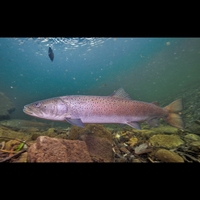
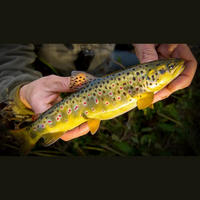
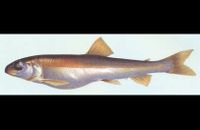
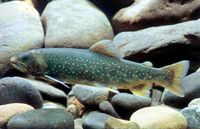
Hucho Hucho.
- Range & Habitat: Native to the Danube River Basin. In Austria, huchen historically inhabited large rivers such as the Danube, Mur, Drau (Drava), Enns, and Salzach. Requires wide, deep, cold rivers with strong current, clean gravel spawning tributaries, and abundant prey fish.
- Appearance & Size: The largest European salmonid. Long, torpedo-shaped body with a silvery base and subtle spots. Can exceed 120 cm and 15–20 kg.
- Behaviour: Apex predator. Feeds on fish, crustaceans, amphibians, and occasionally small mammals. Often holds in deep pools and channels.
- Life Cycle: Spawns in early spring (Mar–Apr) in clean gravel-bottom tributaries. Juveniles remain in shallower areas before migrating to deeper river sections.
- Conservation & Threats: Highly vulnerable due to its large range, late maturity, and low reproductive rate. Threatened by river regulation, barriers, and habitat loss. Populations are supported through regulated fishing, restocking, and protected zones.
Salmo Trutta.
- Range & Habitat: Austria hosts multiple brown trout lineages depending on drainage basin. Danubian lineage trout dominate the Danube basin, including alpine and subalpine rivers such as the Inn, Enns, Mur, and Traun. Atlantic lineage brown trout are native to the Rhine and Elbe basins in western and northern Austria. Brown trout inhabit cold, oxygen-rich streams, rivers, and lakes, from small alpine headwaters to large lowland rivers.
- Appearance & Size: Golden-brown to olive in colour with red and black spots, often surrounded by pale halos. Commonly 35–50 cm; trophy fish can exceed 70–80 cm in large rivers.
- Behaviour: Opportunistic and adaptable. Feeds on insects, crustaceans, and small fish. Holds in riffles, undercut banks, and behind structure.
- Life Cycle: Spawns in late autumn (Oct–Dec) in clean, shallow gravel beds of tributaries. Eggs incubate over winter; fry emerge in early spring.
- Conservation & Threats: In Austria, conservation focuses strongly on protecting native Danubian brown trout genetics, often referred to locally as Urforelle. Historic stocking with non-native Atlantic strains has caused widespread introgression in many rivers. Current management increasingly prioritizes genetic screening, habitat restoration, and the use of locally adapted Danubian broodstock in restocking programs. Remaining threats include river regulation, hydropower development, climate warming, and continued genetic dilution in mixed-lineage systems.
Salvelinus profundus.
- Range & Habitat: Endemic to Lake Constance (Bodensee), which Austria shares with Germany and Switzerland. This species inhabits the deep, cold pelagic and benthic zones of the lake, spending most of its life at significant depths and approaching shallower areas only during spawning periods.
- Appearance & Size: A slender, silvery trout adapted to deepwater life, with reduced pigmentation and a streamlined body. Typically smaller than other large lake-dwelling trout, generally reaching 30–50 cm.
- Behaviour: A specialized deepwater predator feeding mainly on small fish and invertebrates. Rarely encountered by anglers due to its depth preference.
- Life Cycle: Spawns in winter in deep water over fine substrates. Early life stages remain in deep, cold conditions.
- Conservation & Threats: Extremely restricted range makes this species highly vulnerable. Threats include eutrophication, climate-driven changes in lake stratification, and hybridization with other trout forms.
Salvelinus umbla.
- Range & Habitat: Native to deep, cold alpine lakes of the Alps. In Austria, Alpine char occur naturally in many high‑elevation lakes within the Danube drainage, including lakes in Tyrol, Salzburg, and Upper Austria. The species prefers cold, well‑oxygenated water and typically occupies deeper zones during summer.
- Appearance & Size: Dark olive to bluish-grey back with lighter flanks and pale spots. Breeding males develop bright colours in autumn. Usually 30–60 cm, with larger individuals in deep lakes.
- Behaviour: Primarily feeds on zooplankton, benthic invertebrates, and small fish depending on lake productivity. Often forms depth‑related feeding migrations.
- Life Cycle: Spawns in late autumn or early winter on clean gravel or rocky substrates in shallow or deep water depending on the lake. Eggs develop slowly over winter.
- Conservation & Threats: Sensitive to warming water temperatures, eutrophication, and oxygen depletion. Climate change poses a major long‑term threat to low‑elevation populations.
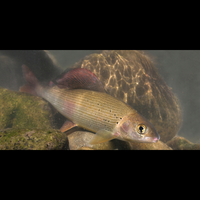
Thymallus Thymallus.
- Range & Habitat: Austria supports multiple European grayling lineages across different drainage systems. Southern Alpine lineage grayling occur in the upper Drava and southern Alpine tributaries. Northern Alpine lineage populations inhabit rivers such as the Inn, Salzach, and Enns. Central European or mixed lineages are found in the Rhine and Elbe basins. Grayling prefer cool, fast‑flowing rivers with gravel bottoms and well‑defined riffle‑run sequences.
- Appearance & Size: Recognized by its large sail-like dorsal fin and delicate colouring. Typically 30–45 cm, with large individuals reaching 50 cm or more.
- Behaviour: Feeds primarily on aquatic insects and small crustaceans. Often active during hatches and visible rising in calmer riffles and runs.
- Life Cycle: Spawns in spring (Mar–May), earlier than trout. Uses shallow gravel beds in riffles with moderate current. Eggs hatch in late spring.
- Conservation & Threats: Sensitive to pollution, water regulation, and sedimentation. Conservation measures focus on habitat protection, flow management, and preserving regional genetic lineages.