Salmo rhodanensis: The Rhône Trout.
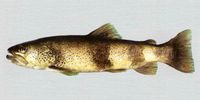
Salmo rhodanensis, commonly referred to as the Rhône trout, represents a distinctive Mediterranean trout lineage historically native to the Rhône River basin and adjacent drainages in southern France and neighboring regions. Once widespread in alpine and subalpine rivers, this trout has experienced severe declines due to habitat alteration and extensive stocking, making it one of the most threatened native trout lineages in Western Europe.
Taxonomy and Classification.
Salmo rhodanensis belongs to the family Salmonidae and the genus Salmo. For much of the 20th century, Rhône basin trout were treated as local forms of Salmo trutta. However, genetic and morphological studies have demonstrated that these populations form a distinct evolutionary lineage within the Mediterranean Salmo complex. Its precise taxonomic rank remains debated. Some authors recognize Salmo rhodanensis as a valid species, while others regard it as a distinct lineage or evolutionary significant unit within Salmo trutta sensu lato. Despite this debate, there is broad agreement that Rhône trout are genetically distinct from Atlantic, Danubian, and most other Mediterranean trout lineages, warranting dedicated conservation attention.
Physical Characteristics.
Salmo rhodanensis generally resembles other Mediterranean trout but shows a combination of traits that distinguish it from Atlantic brown trout:
- Silvery to greyish body coloration
- Few or no red spots, with black spotting concentrated on the upper flanks and back
- A streamlined body adapted to fast-flowing rivers
- Subtle differences in head shape and proportions
- Juveniles with fewer and less persistent parr marks
Adults typically reached lengths of 25–50 cm, though larger individuals were historically present prior to population declines.
Habitat and Distribution.
Historically, Salmo rhodanensis was native to the Rhône River drainage, including alpine and subalpine tributaries in southeastern France and adjacent parts of Switzerland, excluding the Lake Geneva basin. Its range also extended eastward into the Roia (Roya) River basin, which flows from France into northwestern Italy, and possibly into nearby small rivers draining into the Ligurian Sea. These habitats were characterized by cold, well-oxygenated water, strong currents, and gravel substrates fed by snowmelt and springs. Today, genetically pure populations are either extremely rare or possibly extirpated. Most former habitats now contain stocked or hybridized trout, making the confirmation of surviving native populations difficult.
Ecology and Life History.
Salmo rhodanensis was a resident trout adapted to mountain and foothill rivers. Its diet consisted primarily of aquatic insects and crustaceans, with larger individuals occasionally preying on small fish. Spawning likely occurred in late autumn or early spring, depending on elevation and water temperature. Eggs were deposited in clean gravel beds within riffles and shallow runs. Like other Mediterranean trout, the species showed strong site fidelity and limited dispersal, increasing its vulnerability to habitat fragmentation.
Ecology and Life History.
Salmo rhodanensis was adapted to mountain and foothill streams, feeding on aquatic insects, crustaceans, and small fish. It was likely a spring or autumn spawner, laying eggs in gravel beds in oxygen-rich riffles.
Its life cycle and behaviour were generally similar to those of other trout species, though its adaptations to Rhône basin conditions made it ecologically unique.
Conservation Status and Threats.
Salmo rhodanensis is generally regarded as Critically Endangered or Possibly Extinct in the Wild, depending on the source. Major threats include:
- Hybridization with stocked Salmo trutta, particularly Atlantic hatchery strains
- Habitat degradation through damming, channelization, pollution, and water abstraction
- Loss of genetic integrity due to widespread replacement by non-native trout
- Climate change, altering hydrology and increasing water temperatures in mountain streams
Conservation efforts focus on genetic screening of remnant populations, preservation of remaining genetic material, and habitat restoration in selected tributaries where reintroduction may be feasible.
Cultural and Scientific Significance.
Salmo rhodanensis represents an important element of the Rhône basin’s freshwater heritage and illustrates the long-term consequences of unmanaged stocking and river modification. Scientifically, it is a key example of postglacial diversification and the complexity of Mediterranean trout evolution, highlighting the need to recognize and protect distinct evolutionary lineages within widespread species complexes.