Salmo trutta: The Brown Trout.
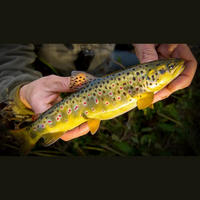

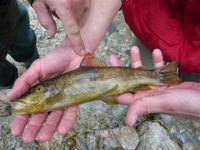
Salmo trutta, commonly known as the brown trout, is one of the most widespread and ecologically versatile salmonid species in Eurasia. Native to Europe, western Asia, and parts of North Africa, it exhibits exceptional phenotypic plasticity and genetic diversity. Rather than representing a single uniform entity, Salmo trutta consists of multiple deeply divergent evolutionary lineages shaped by Pleistocene glaciations and long-term isolation within river basins.
Taxonomy and Classification.
Salmo trutta belongs to the family Salmonidae and the genus Salmo. It was first described by Carl Linnaeus in 1758. Historically treated as a single species with numerous forms, modern genetic research has revealed that S. trutta represents a species complex, composed of several distinct phylogenetic lineages. These lineages are increasingly recognized as independent conservation units and, in some cases, potential future species. Currently recognised major native lineages include:
- Atlantic lineage – native to western and northern Europe; the most widely stocked lineage
- Danubian lineage – native to the Danube River basin
- Mediterranean lineage – inhabiting rivers draining into the Mediterranean Sea
- Adriatic lineage – native to the Adriatic watershed
- Duero lineage – isolated in the Iberian Peninsula
- North African lineage – native to Morocco, Algeria, and Tunisia
Formerly included forms such as the marble trout are now recognised as separate species (Salmo marmoratus) and are no longer considered part of the Salmo trutta complex sensu stricto.
Physical Characteristics.
The appearance of Salmo trutta is highly variable and influenced by habitat, diet, and genetic lineage. General traits include:
- Body coloration ranging from golden-brown to silvery
- Black and red spotting, often with pale halos (lineage-dependent)
- A streamlined, muscular body adapted to flowing water
- Considerable size variation, typically 20–80 cm
Anadromous individuals (sea trout) may exceed 1 meter in length.
Several ecological forms are traditionally recognized, reflecting life-history strategy rather than taxonomy:
- Resident stream trout, (fario form)
- Lacustrine trout, (lacustris form) inhabiting lakes and spawning in tributaries
- Sea trout, (trutta form) migrating between freshwater and marine environments
Habitat and Distribution.
Salmo trutta is native to most major river systems of Europe, extending eastward into western Asia and southward into North Africa. It occupies a wide range of habitats, including:
- Cold, clear mountain streams
- Lowland rivers
- Alpine and subalpine lakes
- Estuaries and coastal waters (sea trout form)
Due to extensive stocking, S. trutta has been introduced far beyond its native range, often masking the original distribution of local lineages.
Ecology and Life History.
Salmo trutta is an opportunistic predator feeding on aquatic invertebrates, terrestrial insects, crustaceans, and fish. Its life-history strategy varies between populations:
- Resident populations complete their life cycle entirely in freshwater
- Anadromous populations migrate to sea for feeding before returning to rivers to spawn
- Lacustrine populations migrate within freshwater systems
Spawning typically occurs in late autumn or early winter. Females excavate redds in gravel substrates where eggs develop over winter. Juveniles often exhibit strong site fidelity and territorial behavior.
Conservation Status and Threats.
Globally, Salmo trutta is listed as Least Concern, but this obscures severe declines at the lineage and population level. Major threats include:
- Genetic homogenization through stocking of non-native lineages
- Habitat degradation from river regulation, pollution, and water abstraction
- Climate change, reducing cold-water habitats
- Overfishing, especially in fragmented systems
Conservation efforts increasingly focus on protecting native lineages, banning inappropriate stocking, restoring river connectivity, and identifying genetic refugia.
Cultural and Scientific Significance.
Salmo trutta has played a central role in European angling culture, literature, and fisheries for centuries. It was among the first fish species to be artificially bred and remains one of the most studied freshwater fishes.
Scientifically, it is a key model organism for research on phylogeography, life-history evolution, and speciation, illustrating how geographic isolation and environmental diversity can drive evolutionary divergence within a widespread species.