Salvelinus umbla: The Alpine Char.
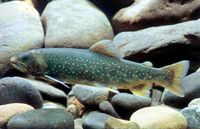
Salvelinus umbla, known as the Alpine char or lake char, is a cold-water salmonid species native to deep, oligotrophic lakes of the European Alps. It is one of the most characteristic fish of clear, high-altitude lakes and represents an important element of the Alpine aquatic ecosystem.
Taxonomy and Classification.
Belonging to the family Salmonidae and the genus Salvelinus, S. umbla was first described by Linnaeus in 1758.
It is part of a complex of closely related lacustrine char species distributed across the Northern Hemisphere.
The Alpine char is genetically and morphologically distinct from the Arctic char (Salvelinus alpinus), though in some regions the two were historically considered a single species. Ongoing genetic studies continue to refine its taxonomic placement within the Salvelinus complex.
Physical Characteristics.
The Alpine char has a slender, streamlined body with silvery to bluish flanks and lighter underparts, often decorated with pale pink or orange spots. Its fins may show subtle orange or red tones during spawning season.
Adults typically measure 25–50 cm, although individuals from deeper, prey-rich lakes can exceed 60 cm. Like other char, it displays sexual dimorphism during breeding, with males developing more vivid coloration and slightly hooked jaws (kype).
Habitat and Distribution.
Salvelinus umbla inhabits deep, cold, oxygen-rich lakes of the European Alps. Its confirmed native range includes Switzerland, Austria, Germany, France, and northern Italy. Within these lakes, it occupies deep pelagic and benthic zones during summer, ascending toward shallower areas during winter and spawning periods.
Ecology and Life History.
Spawning takes place from late autumn to early winter, typically on gravel or rocky substrates in nearshore or deep-water zones with groundwater inflow. Eggs develop slowly through the cold season, hatching in early spring. Juveniles inhabit shallow littoral zones before gradually moving to deeper waters as they mature. The Alpine char feeds mainly on zooplankton, aquatic invertebrates, and small fish, adapting its diet seasonally and vertically within the lake water column.
Conservation Status and Threats.
The Alpine char is sensitive to environmental change and serves as an indicator of water quality.
Key threats include:
- Eutrophication, which lowers oxygen levels in deep water.
- Climate change, reducing the extent of cold-water habitatsCompetition and predation from introduced species (especially trout and perch).
- Overfishing and historical habitat alteration
Conservation programs in the Alpine region focus on maintaining lake oxygenation, reducing nutrient inflows, and monitoring genetic diversity to preserve native stocks.
Cultural and Scientific Significance.
The Alpine char is both scientifically significant and culturally valued. It represents one of Europe’s most specialized salmonids, illustrating adaptation to cold, stable environments. Its presence reflects the ecological health of Alpine lakes, making it an important indicator species for conservation. In traditional Alpine culture, it has long been prized as a symbol of pure, high-mountain waters and is still a sought-after species for sustainable fishing.