Salmo letnica: The Ohrid Trout.
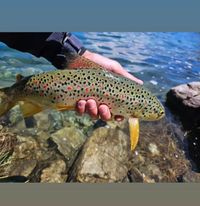
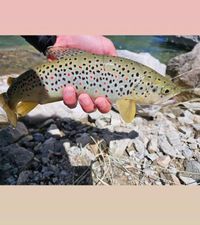

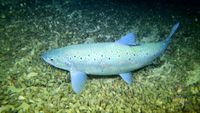
Salmo letnica, commonly known as the Ohrid trout, is a highly specialized and endemic salmonid species confined to Lake Ohrid in the Balkans. This ancient lake, shared between North Macedonia and Albania, hosts one of Europe’s most unique freshwater ecosystems, and S. letnica is one of its most iconic species.
Taxonomy and Classification.
Belonging to the family Salmonidae and the genus Salmo, Salmo letnica is considered a distinct species within the broader Salmo trutta complex. Lake Ohrid is one of the oldest lakes in Europe (estimated at over 1 million years old), and its long isolation has allowed S. letnica to evolve into a unique lineage. Several forms or ecotypes have historically been described within the lake, often based on spawning time and location, though their exact taxonomic status remains debated. Despite this complexity, S. letnica is widely recognized as a separate species due to its ecological specialization and long-term reproductive isolation.
Physical Characteristics.
The Ohrid trout has a streamlined and elegant body adapted to life in deep, clear waters. Key characteristics include:
- Silvery to light brown coloration
- Scattered black spots and occasional red spots
- A relatively slender body compared to riverine trout
- Subtle variation between lake morphs
Adults typically reach 30–60 cm, although larger individuals have been recorded historically.
Habitat and Distribution.
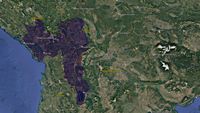
Salmo letnica is endemic to Lake Ohrid and does not naturally occur anywhere else in the world.
Within the lake, it primarily inhabits:
- Deep, cold, oxygen-rich pelagic zones
- Midwater and near-bottom habitats
- Spawning areas in specific shoreline or tributary zones
Different spawning groups are associated with distinct parts of the lake, including both littoral (shoreline) and sublacustrine (underwater spring) environments.
Ecology and Life History.
The Ohrid trout is a slow-growing, late-maturing species adapted to the stable conditions of a deep ancient lake.
Key traits include:
- Feeding on zooplankton, aquatic insects, and small fish
- Spawning between December and February, depending on the population
- Strong site fidelity to specific spawning grounds
- Presence of multiple spawning ecotypes within the lake
Juveniles develop in protected areas before moving into deeper open water as they mature.
Conservation Status and Threats.
Salmo letnica is currently classified as Vulnerable, with some subpopulations under even greater pressure.
Main threats include:
- Overfishing and illegal fishing, especially during spawning periods
- Habitat degradation, including shoreline development and pollution
- Eutrophication, affecting water quality and oxygen levels
- Water extraction and hydrological changes
- Genetic introgression from stocked or non-native trout
Because the species is confined to a single lake, it is particularly vulnerable to environmental change.
Conservation efforts focus on fishing regulation, protection of spawning areas, and international cooperation between North Macedonia and Albania.
Cultural and Scientific Significance.
The Ohrid trout is one of the most famous freshwater fish in the Balkans and holds strong cultural and economic value. It has traditionally been regarded as a delicacy and a symbol of Lake Ohrid. Scientifically, it is extremely important as:
- A model for evolution in ancient lakes
- An example of ecological diversification within a single system
- Part of one of Europe’s most unique endemic freshwater faunas
Its survival is closely tied to the preservation of Lake Ohrid itself, making it a flagship species for regional conservation.