Salvelinus evasus: The Ammersee Char.
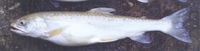
Salvelinus evasus, known as the Ammersee char, is a rare deep-water salmonid endemic to Lake Ammersee in southern Germany. It is one of Europe's most geographically restricted freshwater fishes and is adapted to the cold, dark waters of the lake's deepest basin. Described as a new species in 2005, it remains one of the most recently recognized members of the genus Salvelinus.
Taxonomy and Classification.
Belonging to the family Salmonidae and the genus Salvelinus, Salvelinus evasus was formally described by Jörg Freyhof and Maurice Kottelat in 2005. It is a deep-water char endemic to Lake Ammersee in southern Germany and represents one of Europe's most recently described salmonid species. Historically, the char population of Lake Ammersee was regarded as part of the wider Alpine char complex. Following detailed morphological studies, it was recognized as a distinct species based on a unique combination of anatomical characteristics and its adaptation to deep-water habitats. Today, Salvelinus evasus is recognized as a valid species by FishBase and many ichthyologists, although its evolutionary relationship with other members of the Alpine char complex continues to be studied. Future genomic research may provide further insight into its taxonomic status.
Physical Characteristics.
The Ammersee char is a relatively small and slender deep-water char.
Adults typically measure 20–35 cm, although larger individuals may occur.
Compared with other Alpine char it is characterized by:
- A slender body adapted to deep-water habitats.
- A blunt snout with a slightly subterminal mouth.
- Silvery to pale yellow flanks, sometimes with faint pale spots.
- Relatively large eyes, adapted to the low-light conditions of deep lakes.
- A generally lighter appearance than many shallow-water char.
Like many deep-water salmonids, its coloration is more subdued than that of spawning Arctic or Alpine char.
Habitat and Distribution.
Salvelinus evasus is endemic to Lake Ammersee in Bavaria, southern Germany. It inhabits the deepest parts of the lake, generally remaining close to the bottom in cold, well-oxygenated water. Unlike Salvelinus umbla, which occurs in numerous Alpine lakes, the Ammersee char is restricted to a single lake, making it particularly vulnerable to environmental change.
Ecology and Life History.
Little is known about the biology of Salvelinus evasus, reflecting both its rarity and deep-water habitat. The species is believed to spend most of its life in the profundal zone of Lake Ammersee, where it feeds primarily on benthic invertebrates and other small aquatic organisms. Like other char, spawning is thought to occur during late autumn or early winter on suitable gravel or rocky substrates, although many aspects of its reproductive biology remain poorly studied. Its long isolation within Lake Ammersee has likely contributed to the evolution of its distinctive morphology.
Conservation Status and Threats.
The Ammersee char has an extremely restricted distribution, making it inherently vulnerable. Key threats include:
- Eutrophication reducing oxygen availability in deep water.
- Climate change altering lake stratification and thermal conditions.
- Pollution affecting water quality.
- Small population size and limited genetic diversity.
Because the species is confined to a single lake, any major environmental change could affect the entire global population. Continued monitoring and protection of Lake Ammersee's deep-water ecosystem are therefore essential.
Cultural and Scientific Significance.
Although little known outside scientific circles, Salvelinus evasus is an important example of postglacial evolution in European lakes. Its discovery in 2005 demonstrated that even well-studied Alpine lakes can still contain previously unrecognized endemic fish species. The Ammersee char also highlights the ongoing challenges of char taxonomy in Europe. While many historically described European char are now considered localized forms of Salvelinus alpinus, S. evasus remains one of the strongest candidates for recognition as a distinct European species. As such, it continues to be an important subject for research into salmonid evolution, taxonomy, and freshwater conservation.